Patellar Tendonitis: Why Rest Alone Won’t Fix It
Key pointers
- Short answer: rest alone won’t fix patellar tendonitis because tendons heal by being loaded, not by being left alone. Pain drops while you rest, then comes back the moment you jump, squat or run again.
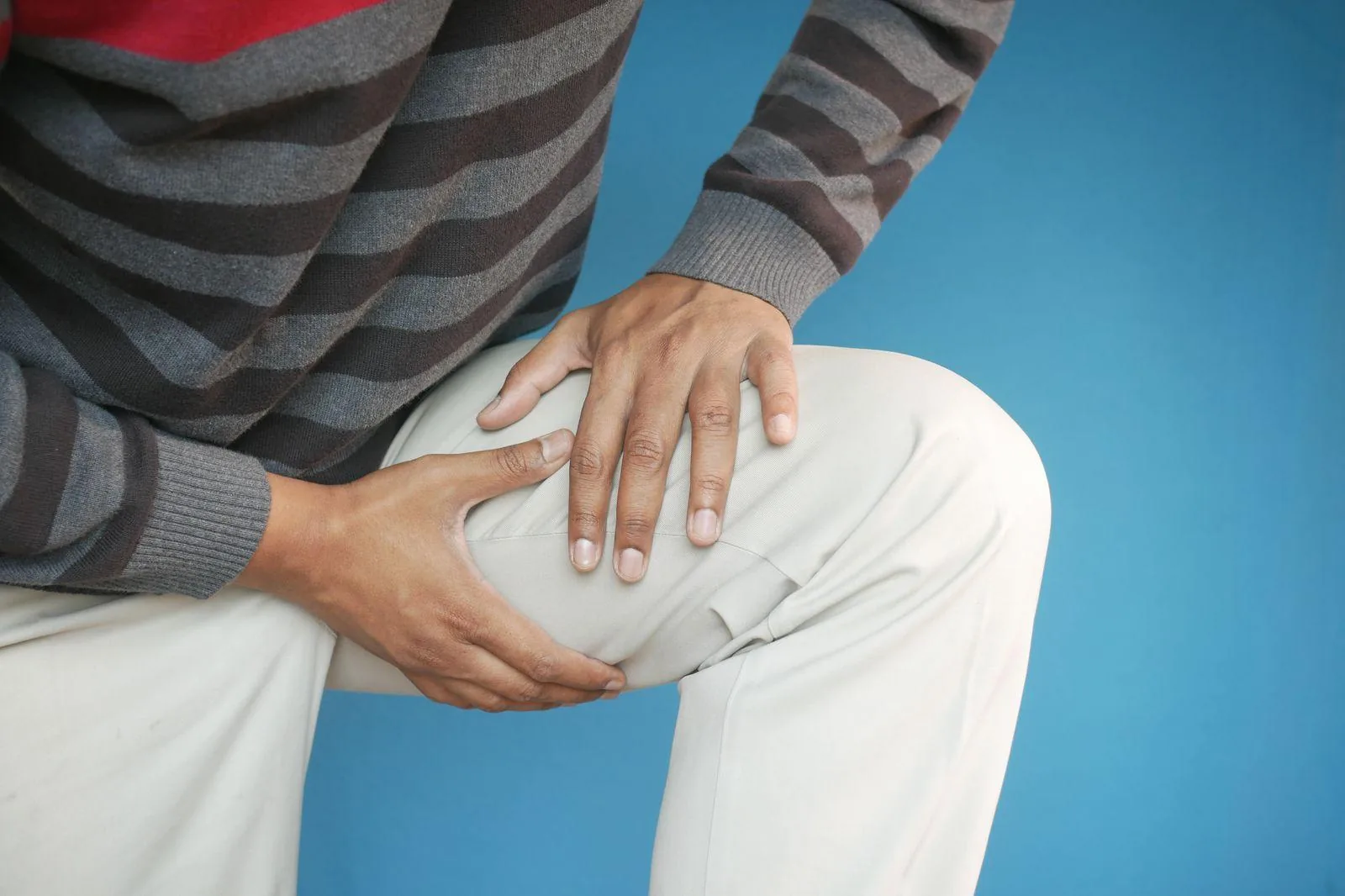
- Patellar tendonitis (jumper’s knee) is pain at the bottom of the kneecap where the tendon attaches. It’s a loading problem, not an inflammation problem.
- The fix is progressive loading: isometrics to calm pain, then heavy, slow strength work to rebuild the tendon over 12 weeks or more.
- Stretching, ice and braces can help you feel better for an hour. They don’t change the tendon.
- At Pursuit, every visit is 60 minutes one-on-one with Dr. TJ, in a gym built for loading a knee the way your sport does.
- No referral needed in Massachusetts; Pursuit is out-of-network and provides superbills.
You felt the sharp pain under your kneecap after a hard week of practice. So you did what everyone told you to do: you rested. Two weeks later you felt fine. Then you jumped, and it was right back.
That cycle is the signature of patellar tendonitis, and it’s why rest alone keeps failing. A tendon doesn’t get stronger by sitting still. It gets weaker.
Here’s what’s happening in the tendon, why the usual advice stalls, and what a real patellar tendonitis treatment plan looks like. It’s the same approach we use for jumping athletes in sports physical therapy.
What patellar tendonitis actually is
The patellar tendon connects your kneecap to your shin bone. Every jump, landing, squat and sprint loads it. When the load you ask of it climbs faster than it can adapt, the tendon’s structure changes and it starts to hurt, usually right at the lower tip of the kneecap.
Two things to know:
- It’s rarely true inflammation. The better term is patellar tendinopathy. There’s little to “calm down” with ice and anti-inflammatories; the tendon has become less able to handle load.
- It warms up. Pain is often worst at the start of activity, eases once you’re moving, then flares the next morning. That pattern separates it from most other knee problems.
If your pain is around or behind the kneecap rather than below it, read runner’s knee: why it hurts and why your plan has to be yours. The two get confused constantly, and the treatment is different.
Why rest alone doesn’t work
1. Tendons adapt to load, in both directions. Load a tendon progressively and it gets stiffer and stronger. Unload it and it loses capacity. After two weeks on the couch, your tendon can tolerate less than it could before, so the first practice back overloads it again.
2. Rest treats the pain, not the cause. Most people with jumper’s knee have a strength gap somewhere: quads, glutes, calves or how they land. Rest doesn’t touch any of that. Strength and performance training does.
3. The rest of you detrains too. Four weeks off costs you quad strength, conditioning and confidence. You return weaker, to the same sport, with the same tendon.
4. Passive fixes fill the gap. Straps, foam rolling, stretching, ice. They change how the knee feels today. None of them change what the tendon can handle next month.
What actually fixes a patellar tendon
The tendon needs the right load, in the right dose, progressed over time. In practice that looks like a staged plan.
| Stage | What you do | What it does |
|---|---|---|
| 1. Calm the pain | Isometric holds (wall sits, Spanish squats), 30–45 seconds, several times a day | Reduces pain for hours and keeps the tendon loaded |
| 2. Rebuild strength | Heavy, slow resistance: leg press, split squats, decline squats, 3 seconds down and 3 seconds up | Restores the tendon’s structure and quad strength |
| 3. Store and release energy | Faster movements: jumps, hops, landings, progressed in height and volume | Prepares the tendon for the speed of your sport |
| 4. Return to sport | Sport-specific drills with volume tracked, plus testing | Confirms you’re ready, not just pain-free |
Two rules make this work. First, some pain during loading is fine, as long as it settles within 24 hours. Second, you don’t skip stages. Jumping before the tendon is strong is how most relapses happen.
Hands-on care like manual therapy and dry needling for a tight quad can make the loading more comfortable. It supports the plan; it isn’t the plan.
How long patellar tendonitis takes to heal
Tendons are slow. Most people feel noticeably better in 4–6 weeks of consistent loading, but the tendon keeps rebuilding for 12 weeks or more. The patients who get stuck are the ones who feel 80% better at week five and go straight back to full practice.
At Pursuit, your plan has dates attached. You’ll know which stage you’re in, what the next one requires, and what test gets you there.
How Pursuit treats patellar tendonitis
Every visit at Pursuit PT & Performance in Hopedale is a full 60 minutes with Dr. Tarandeep Jaidka (TJ). For a patellar tendon, that hour is used like this:
- Confirm it’s the tendon. Fat pad irritation, runner’s knee and Osgood-Schlatter all hurt near the same spot and need different plans.
- Find the driver. Quad strength, calf strength, hip control and landing mechanics are measured, not guessed.
- Load it properly. Real squat racks, leg press and plates, not a resistance band. That’s the point of strength and performance training sitting inside your rehab. If a tight quad gets in the way, we add dry needling.
- Manage your season. If you’re mid-season, we plan around practices and games instead of pulling you out.
- Test before you return. Return-to-sport testing checks single-leg strength and hop performance side to side before you’re cleared.
Signs you should see a physical therapist
- Pain below the kneecap that has lasted more than 2–3 weeks
- Pain that eases during a warm-up and returns the next morning
- You’ve rested at least once and the pain came back when you returned
- Jumping, stairs or squats are getting harder, not easier
- You’re avoiding your sport or playing through it with a strap
- Your knee feels weak or you’re favoring the other leg
Runners with tendon pain can start with care for runners and endurance athletes.
Frequently asked questions
What is the best treatment for patellar tendonitis?
Progressive strength training for the tendon, starting with isometrics and moving to heavy, slow resistance and then jumping. That’s the only approach with consistent evidence for lasting results.
Should I stop playing sports with patellar tendonitis?
Usually not completely. Most athletes keep training with volume adjusted while the tendon is rebuilt. A full stop is reserved for severe cases and is kept short.
Does ice or a patellar strap help?
Both can make the knee feel better for a short time. Neither changes the tendon, so use them alongside loading, not instead of it.
Do I need a referral in Massachusetts?
No. Massachusetts allows direct access, so you can book with us directly. Learn more in do you need a referral to see a physical therapist in Massachusetts.
Do you take insurance?
We’re out-of-network. We provide superbills you can submit to your insurer.
Where are you located?
We’re at 3b Condon Way, Hopedale, MA. Patients come from Milford, Franklin, Hopkinton, Holliston, Medway and across the MetroWest and Greater Boston area.
Stop resting it. Start rebuilding it.
If your knee has been through the rest-and-relapse loop more than once, the tendon isn’t the problem. The plan is. Book a full hour with TJ and leave with a loading program built for your sport.
Book an appointment, no referral needed.