
Runners & Endurance Athletes
Care that considers your training, movement and workload, whether you're rebuilding mileage or preparing for a race.
No referral needed to get started in Massachusetts.
100% one-on-one
Full 60-minute sessions
Doctor of Physical Therapy, every visit
Rehab and strength training under one roof
Pain-free running starts with how you run and how you train
Most running injuries aren't caused by one bad step. They build up over weeks, as training load, strength, running form and recovery work together. Fix only one and the problem often comes back.
Physical therapy for runners and endurance athletes at Pursuit looks at the whole picture. We watch how you run with a video running gait analysis, review your training and test your strength, then build a plan around what we find. It's for runners at every level, from your first 5K to your next marathon or ultra, whether you're coming back from a running injury or preparing for race day.
Running gait analysis: what we look at
A running gait analysis is a close look at how you move when you run. We record you on a treadmill at your normal pace and review the video with you, looking at things like:
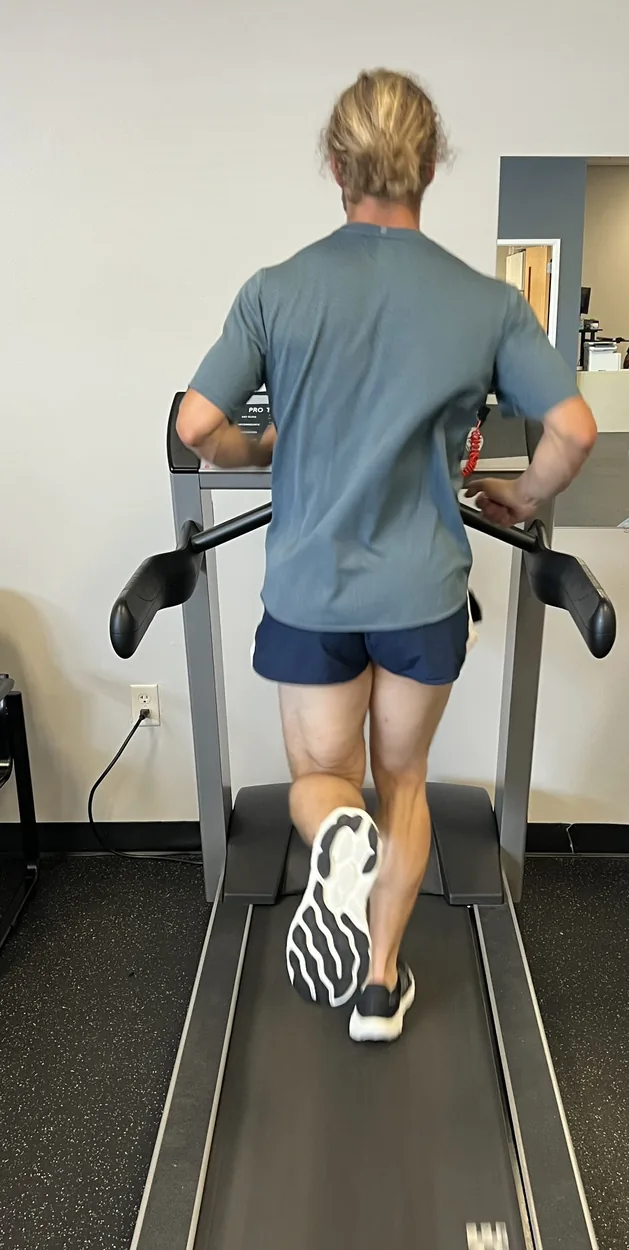
● Cadence (steps per minute) and stride length
● Foot strike and where your foot lands relative to your body, including overstriding
● Trunk, pelvis and arm position
● How your hips, knees and ankles control each step
● Left and right differences
There's no one perfect running form. Plenty of strong runners look different. What matters is whether your running mechanics are working for you or loading one area too much.
What happens in a visit
1. We start with you. Your running history, your goals, your weekly mileage and training plan, and what hurts.
2. We test and watch. Strength, mobility and single-leg control, then treadmill video at your normal pace.
3. We explain what we see. You see your own video, and we show you which changes might matter and which don't.
4. We build your plan. It may include strength training, small changes in cadence or form, training load adjustments and hands-on manual therapy.
You don't have to change how you run. Often the biggest gains come from strength and training load, with a small form change or none.
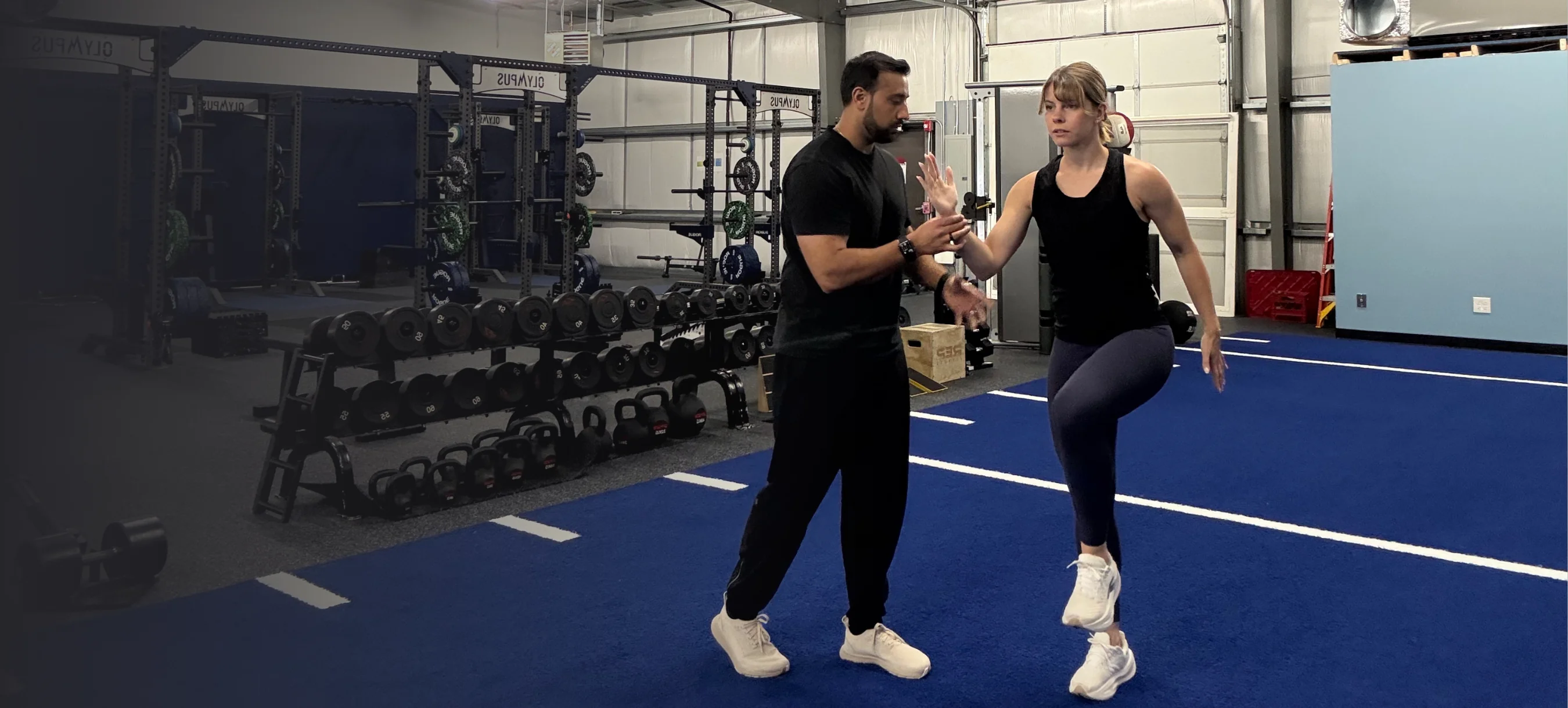
A movement screen is part of the visit: how you squat, lunge and balance on one leg, so we can see what might be limiting you before you ever step on the treadmill.
How we think about running form
Research suggests that a small increase in step rate, in the range of 5 to 10%, can reduce load at the knee and hip for some runners. It doesn't work for everyone, and bigger changes aren't better. We make small changes, one at a time, and only when they make sense for you. For most runners, strength and a smart training plan matter more than form.
Running injuries we treat
● Runner's knee (patellofemoral pain) and patellar tendonitis
● IT band syndrome and pain on the outside of the knee or hip
● Shin splints (medial tibial stress syndrome)
● Achilles tendonitis and calf strains
● Plantar fasciitis and heel pain
● Hip and glute pain, including hip impingement (FAI) and high hamstring tendonitis
● Low back pain that shows up with running
● Ankle sprains for runners who roll an ankle on the trail
● Overuse injuries and tendon pain that haven't settled with rest
● Bone stress injuries and stress fractures. These can need a doctor's evaluation first, and we'll tell you if that's the case.
Physical Therapy for endurance athletes
Many runners come before they get hurt. If you're training for a half marathon or marathon, stepping up mileage or coming back from time off, a gait analysis and a strength plan can help you build more safely. The same approach works for triathletes, cyclists, trail and ultra runners, hikers and other endurance athletes, where repeated load and training volume drive most injuries.
Return to running after injury
We don't tell you to stop running unless you need to. Where it's safe, we find a way to keep you moving: shorter runs, different surfaces, run-walk intervals or cross-training. As you get stronger, we raise the load in steps. Before you go back to full training, we check your strength, hopping and movement, so your return to running is based on how you test, not just how long it's been.
Strength training for runners
Running is a lot of single-leg hopping. Strong calves, quads, hips and trunk help you absorb and produce force with every step, which supports both injury prevention and running performance. That's why most plans at Pursuit include strength work, and why our strength and performance training pairs well with care for runners.
Runners and race day
Pursuit sits in the Blackstone Valley, a short drive from Hopkinton, the starting line of the Boston Marathon. Whether you're training for a spring marathon, a fall half or a local 5K, we plan your rehab and strength work around your race calendar and taper.
Your physical therapist
Your gait analysis and care come from Dr. Tarandeep (TJ) Jaidka, a doctor of physical therapy, one-on-one at every visit.
Cost and payment
Pursuit offers cash based physical therapy: we're out of network and don't bill insurance. If you want out of network physical therapy, or you're looking for physical therapy without insurance, you can book directly. Direct access physical therapy is allowed in Massachusetts, so you don't need a referral.
Physical Therapy for runners near Hopedale, MA
We're at 3b Condon Way in Hopedale, MA, serving runners and endurance athletes from Milford, Mendon, Upton, Franklin, Hopkinton, Grafton and across the Blackstone Valley. Monday through Saturday, by appointment.
If you're searching for a physical therapist near me who works with runners, or running gait analysis near me, Pursuit is in Hopedale and open Monday through Saturday by appointment.
Take the next step toward your goals.
Tell us about your running, your training and where it hurts.
1. Book an appointment. Tell us what you'd like to get back to.
2. Pick a time. Then we'll get started.
Move better. Perform stronger. Pursue more.
Frequently asked questions
Who is this for?
Runners and endurance athletes at any level: road and trail runners, half marathon and marathon runners, triathletes, cyclists and hikers. You don't need to be fast or competitive.
What is a running gait analysis?
A video and movement assessment that looks at how you run, along with your strength and training, to find what may be loading you too much.
Will you change how I run?
Not necessarily. Many runners need strength and training changes more than form changes. If we change anything, it's small and one step at a time.
Do I need to be injured to come in?
No. Many runners come for injury prevention, to build mileage safely or to get ready for a race.
Should I wear anything special?
Wear what you normally run in, including your running shoes. Bring a second pair if you're thinking about changing shoes.
Can I keep running while I'm hurt?
Often, yes, with changes. After your assessment we'll tell you what's safe. Some injuries, like a suspected stress fracture, need a doctor first.
How long until I can run normally again?
It depends on the injury, how long you've had it and how you respond to treatment. After your assessment, TJ will walk you through what to expect and a step-by-step plan for returning to running.
Do I need a referral?
No. Massachusetts allows you to see a physical therapist directly.