Dry Needling
A tool for muscle pain and tightness that hasn't settled with exercise and hands-on work alone. Used as one part of a one-on-one plan, never as the whole plan.
No referral needed to get started in Massachusetts.
100% one-on-one
Full 60-minute sessions
Doctor of Physical Therapy, every visit
Needling paired with movement and strength
What is dry needling?
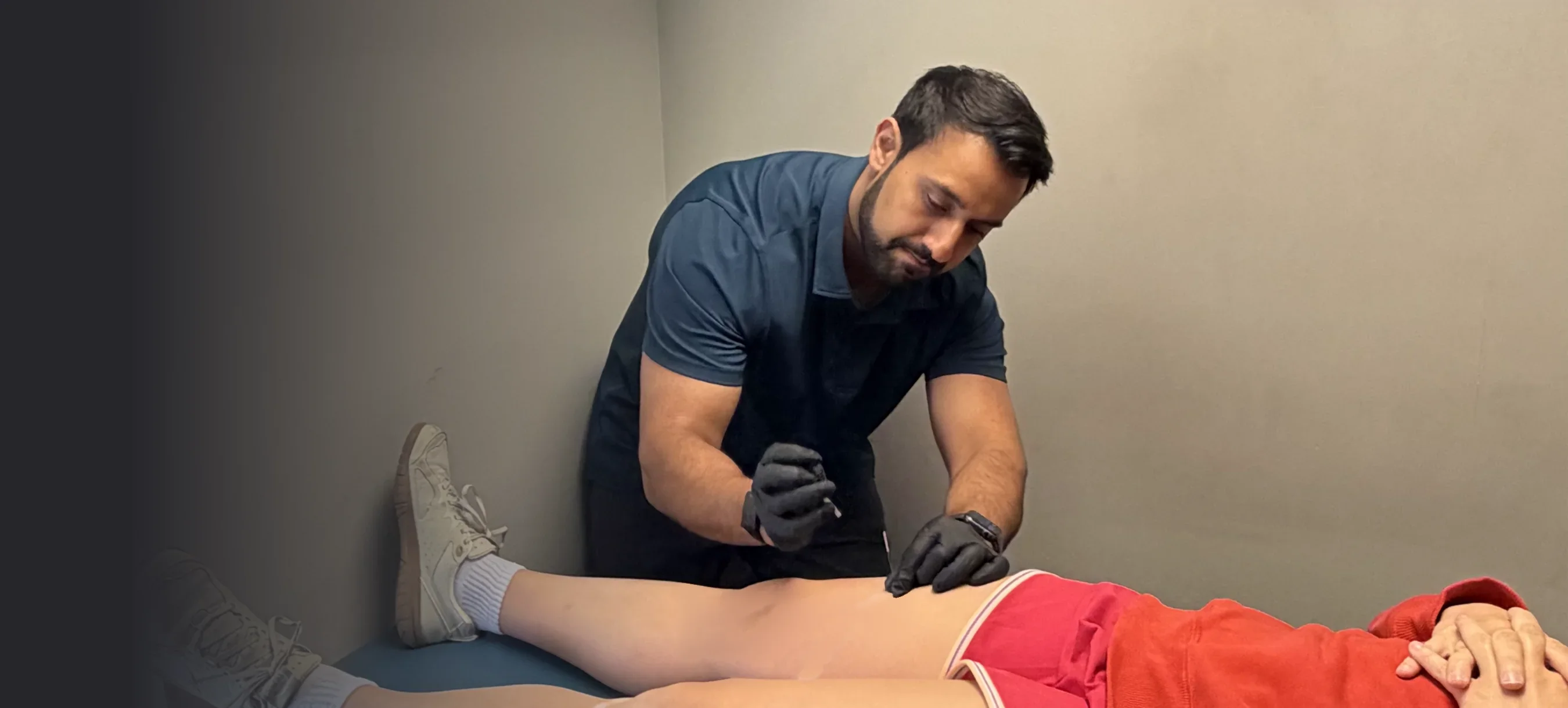
Dry needling is a technique where a physical therapist places a very thin, solid needle into a tight or irritable spot in a muscle, often called a trigger point.
The goal is to reduce muscle tension and pain so that you can move more comfortably and get more out of your exercises. It's not a cure, and it's not a replacement for strengthening and movement. At Pursuit, it's an add-on we use when it makes sense for you and drop when it doesn't.
How does it help?
Muscles that stay tight or guarded can limit motion, refer pain to other areas and make exercise harder than it needs to be. The needle can create a brief local response in the muscle, sometimes a quick twitch or a deep ache, followed by a feeling of release.
What most people notice, when it works, is some relief and easier movement for a window of time. We use that window to do the work that lasts: restoring strength, improving how you move, and fixing the load that caused the problem in the first place.
What dry needling may help with?
Dry needling is most often considered when muscle tightness or trigger points seem to be part of the picture. That can include:
- Neck pain and tension headaches that start in the neck and upper back
- Shoulder pain, including tight muscles around the shoulder blade
- Low back and glute tightness
- Hip pain and hamstring tightness
- Calf, shin and foot tension in runners
- Tennis elbow and forearm tightness
- Muscle pain that lingers after a hard training block
Not everything on that list needs needling. Often, hands-on work and a good exercise plan are enough. We'll look at your assessment first and recommend it only if it's likely to add something.
Dry needling, acupuncture and massage
People often ask how these compare. They're different tools with different reasoning.
Dry needling | Acupuncture | Massage and manual therapy | |
|---|---|---|---|
What it is | A thin needle placed into tight muscle or trigger points | Thin needles placed at points along traditional meridians | Hands-on pressure and movement applied to soft tissue |
Based on | Modern understanding of muscle and nerve pain | Traditional Chinese medicine | Anatomy and soft-tissue mechanics |
Used by | Physical therapists trained in the technique | Licensed acupuncturists | Massage therapists and physical therapists |
Goal | Reduce muscle tension and pain to support rehab | Varies by practitioner and condition | Ease tension and improve mobility |
Electrical stimulation | Often paired with a STIM unit: a gentle pulse through the needles into the target muscle | Sometimes used (electroacupuncture), at meridian points | Not used |
Fit at Pursuit | Used within a plan when appropriate | Not offered | Manual therapy is part of many plans |
Dry needling and acupuncture use similar-looking needles, but they come from different approaches. Neither is better in every case. For many muscle problems, hands-on treatment gets a similar result without a needle, which is a good thing if you'd rather not have one.
Dry needling with electrical stimulation
Sometimes we add a mild electrical current once the needles are in place. This is electrical dry needling, often called dry needling with STIM. A small STIM unit connects to the needles with thin clips and sends a gentle, adjustable pulse through the muscle.
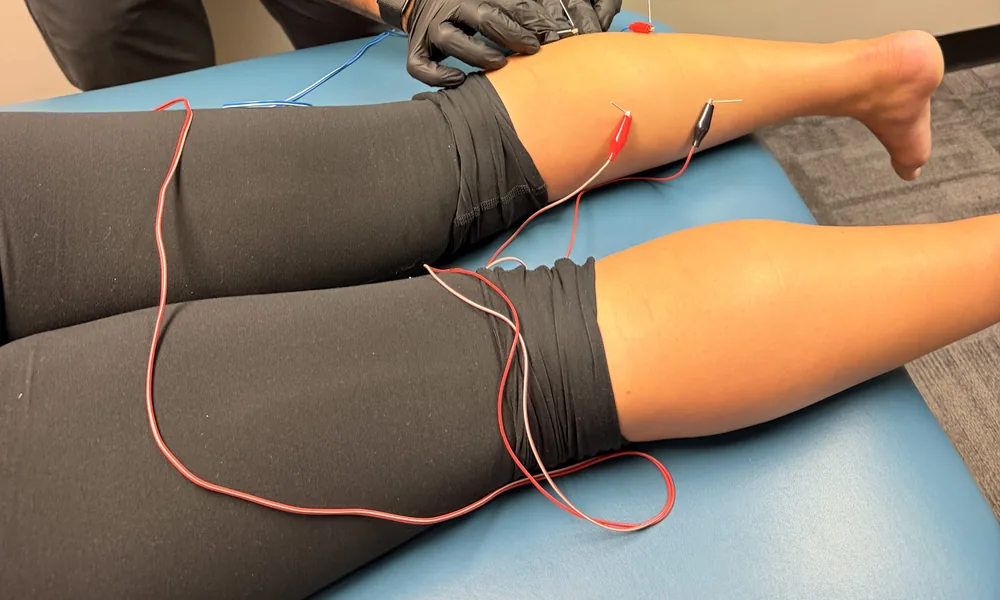
- What it feels like. A light tapping or pulsing in the muscle. We set the intensity to your comfort, and you can ask us to turn it down at any time.
- Why we use it. The current can help a tight, guarded muscle let go and ease pain for a while, so the movement and strength work that follows is easier.
- How it differs from acupuncture. Acupuncture places needles along traditional meridians. Dry needling with STIM targets the specific muscles your assessment points to, and we follow it with exercise in the same session.
Not every session needs it. We'll tell you when it makes sense for you and why.
What a session feels like
- First, we talk and assess. Dry needling is never the first thing we do. We examine how you move and where the problem seems to be coming from.
- We explain, and you decide. We'll tell you what we'd do, how it feels, what the risks are and what the alternatives are. You'll give your consent before we start, and you can say stop at any time.
- Needling takes a few minutes. New needles for every patient, used once and discarded. You may feel a small prick, then a cramp, twitch or deep ache. It's usually brief.
- Then we move. Needling is followed by exercise, stretching or hands-on work, so you can use the window of relief.
After your session
Some soreness is common for 24 to 48 hours, a bit like after a hard workout. Mild bruising can happen too. Most people can go about their day, and we'll tell you what to do about training, heat and hydration. Contact us if something doesn't feel right.
Serious complications are rare. Because needles are placed near muscle, they can affect nearby tissue, so training and technique matter. That's the reason we discuss risks with you every time.
Who dry needling may not be right for
We may recommend waiting, or not needling at all, if you:
- Take blood thinners or have a bleeding disorder
- Are pregnant, or think you might be
- Have an active infection or skin condition at the area
- Have lymphedema or swelling in the area, or a history of lymph node removal on that side
- Have a metal allergy or a strong fear of needles
- Have an implanted device or other medical condition we should review first
None of these is an automatic no, but each is something to tell us about. Please share your full medical history and medications at your first visit. If dry needling isn't right for you, we have other ways to help.
How it fits into your plan
At Pursuit, care is one-on-one and built around your goals. Dry needling, when used, sits inside that:
- Understand your starting point. We assess how you move, what's tight, what's weak and what's driving the pain.
- Build the capacity to move forward. We combine needling, manual therapy and targeted exercise, so relief turns into strength and better movement.
- Get back to what matters. We step out of treatments you don't need and build you up for training, work and life.
If your pain has a clear cause, like an injury or a surgery, dry needling would sit alongside one-on-one physical therapy or sports physical therapy, and not replace them.
Your physical therapist
Dry needling is performed by Dr. Tarandeep (TJ) Jaidka, a doctor of physical therapy, in one-on-one sessions.
Dry needling for patients near Hopedale
Pursuit is at 3b Condon Way in Hopedale, MA, and we welcome patients from the Blackstone Valley and the surrounding towns, including Milford, Mendon and Upton. See all areas we serve.
Monday through Saturday, by appointment.
Take the next step toward your goals.
Tell us where it hurts and what you'd like to get back to. We'll let you know whether dry needling would help.
- Book an appointment. Talk through your pain and your goals.
- Pick a time. Then we'll get started.
Move better. Perform stronger. Pursue more.
Frequently asked questions
Is dry needling the same as acupuncture?
No. They use similar needles, but they're based on different ideas. Dry needling targets tight muscle and trigger points using a physical-therapy approach. Acupuncture comes from traditional Chinese medicine and is practiced by licensed acupuncturists.
Does dry needling hurt?
Most people feel a small prick and then a brief cramp, twitch or deep ache. It's usually quick. Soreness the next day is common. If it's too much, we stop.
Is it safe?
Dry needling is generally considered low-risk when performed by a trained clinician, but it isn't risk-free. Bruising and soreness are the most common effects. Rare complications can happen, and we'll go over them with you before we start.
How many sessions will I need?
It depends on you. Some people notice a change after one or two sessions. Others don't respond. We'll check after the first few visits and stop if it isn't helping.
Can I exercise after dry needling?
Usually, yes, and we'll tell you how much. Light movement is often encouraged. We might suggest avoiding a very hard session on the treated area for a day or so.
Does it work?
For some people with muscle pain, yes, mostly in the short term. Research is mixed, and it works best alongside exercise. That's why we use it as part of a plan.
Do I need a referral?
No. Massachusetts allows you to see a physical therapist directly.
Will insurance cover it?
Pursuit is out-of-network and private-pay.
Can I choose not to have it?
Absolutely. It's always your choice, and there's usually another way to get you moving.