Dry Needling vs Massage: What’s the Difference?
Key pointers
- Short answer: dry needling uses a thin needle to reach a tight, painful spot deep in a muscle that hands can’t get to. Massage works muscle and fascia from the surface. Both can ease pain; neither fixes the reason the muscle tightened in the first place.
- Dry needling is not acupuncture. It uses the same type of needle, but the target is a specific trigger point, chosen from an assessment, not a point on a meridian.
- It works fast and deep. A single session can change a muscle that’s resisted weeks of rolling and rubbing.
- Massage is broader and gentler. Useful for general tension, recovery and relaxation.
- At Pursuit, dry needling is one tool inside a 60-minute visit, paired with hands-on care and the strength work that makes the change last.
- No referral needed in Massachusetts; Pursuit is out-of-network and provides superbills.
You’ve had the knot in your upper trap for months. Massage helps for a day. Foam rolling helps for an hour. Someone at the gym says you should try dry needling, and you’re not sure what that is, whether it hurts, or whether it’s just a fancier massage.
It isn’t. The two do different things, reach different depths and suit different problems.
Here’s what dry needling actually is, how it compares with massage, and how to know which one your shoulder, hip or calf needs.
What dry needling is
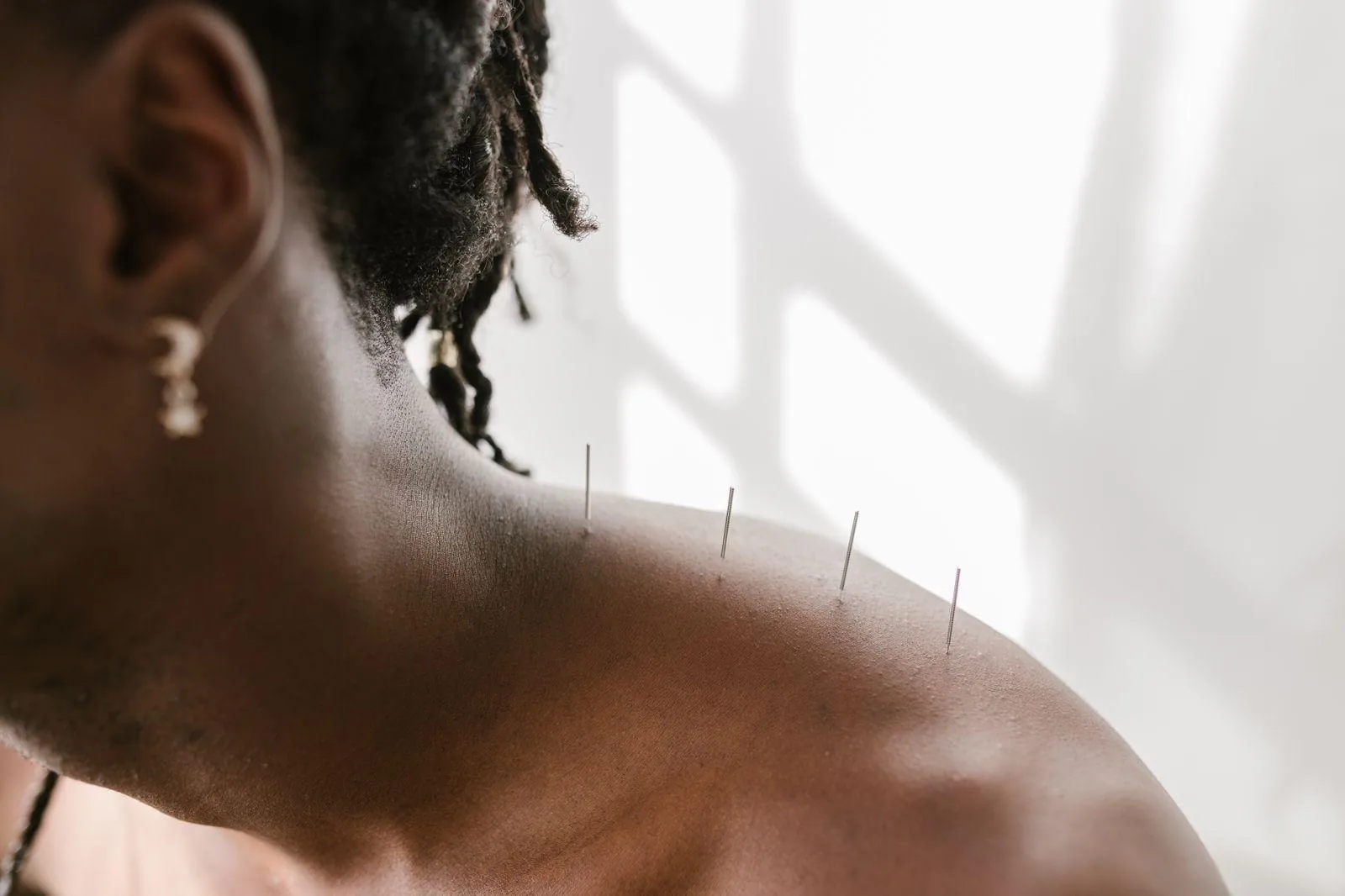
Dry needling is a treatment where a licensed physical therapist inserts a thin, solid needle into a specific tight band of muscle, called a trigger point. “Dry” means nothing is injected. The needle itself is the treatment.
When the needle reaches the trigger point, the muscle often gives a brief twitch. That twitch is the muscle releasing. Afterward the band is softer, the area is less tender and the joint around it usually moves more freely.
It’s typically used for:
- Stubborn muscle knots in the neck, upper back and shoulders
- Tight hip flexors, glutes and piriformis causing hip or back pain
- Calf and hamstring tightness in runners
- Tension headaches that start in the neck
- Jaw, elbow and forearm pain from overworked muscles
In Massachusetts, dry needling is performed by physical therapists with specific additional training. At Pursuit it’s one of Dr. TJ’s core skills, used inside a one-on-one physical therapy visit.
Dry needling vs massage: the real differences
| Dry needling | Massage | |
|---|---|---|
| How it works | A thin needle reaches a specific trigger point deep in the muscle | Hands, elbows or tools work muscle and fascia from the surface |
| Depth | Deep: reaches muscles hands can’t, like the deep hip rotators or the muscles under the shoulder blade | Surface to mid-depth, limited by the therapist’s pressure and your tolerance |
| Precision | Targets one tight band chosen from an assessment | Covers a broad region |
| Speed of change | Often immediate; one or two sessions can shift a stubborn knot | Gradual; relief builds over repeated sessions |
| What it feels like | A brief, deep ache or twitch, then release; some soreness for a day | Pressure, sometimes intense; relaxing |
| Best for | A specific knot driving pain or restricting movement | General tension, recovery, stress, whole-body tightness |
| Who does it | A trained physical therapist | A massage therapist or PT |
Neither one is better. They’re for different jobs. If your problem is one stubborn band of muscle that keeps pulling on a joint, needling reaches it. If your whole upper back is tight after a long week, massage covers it.
Dry needling vs acupuncture
The needles look the same, which is where the similarity ends. Acupuncture is a practice from traditional Chinese medicine that places needles along meridians to influence the flow of energy. Dry needling is a Western technique built on muscle anatomy: the needle goes into the specific trigger point that your assessment identified, to change how that muscle behaves.
If you’ve had acupuncture and liked it, dry needling will feel more targeted and, usually, more intense at the moment of the twitch.
Wondering how this compares to an adjustment? See physical therapy vs. chiropractor for back pain.
Why neither one is a complete treatment
This is the part most clinics leave out. A muscle doesn’t tighten for no reason. It tightens because it’s being overworked, because the joint it crosses isn’t moving well, or because a weaker muscle somewhere else isn’t doing its job.
Needling or massage can release the muscle today. Unless the reason it tightened changes, it’ll be back next month. That’s why at Pursuit dry needling and manual therapy sit inside a plan, never on their own:
- Assess first. Find which muscle is overworked and why, across the whole body, not just where it hurts.
- Release it. Dry needling, manual therapy, or both, depending on what the tissue needs.
- Use the window. Right after a release, the joint moves better and the muscle fires better. That’s when we load it.
- Change the cause. Strength, mobility and movement work through strength and performance training, so the muscle stops being overworked.
Every visit at Pursuit PT & Performance in Hopedale is 60 minutes, one-on-one with Dr. Tarandeep Jaidka (TJ). Dry needling takes ten of those minutes. The other fifty are what make it stick. If you’ve only ever had ten rushed minutes of hands-on care, read why 15-minute physical therapy visits don’t fix your pain.
What to expect from a dry needling session
- It’s quick. Each needle is in for seconds to a couple of minutes. A full treatment of one area takes 5–15 minutes.
- It can feel strange. A deep ache, a cramp or a twitch at the trigger point. Most people describe it as odd rather than painful.
- You may be sore. Like after a hard workout, for up to a day or two. Movement and heat help.
- Results are often same-day. Better range of motion and less tenderness, which is why we load the muscle right after with strength and performance training.
- It’s safe when done properly. Single-use sterile needles, by a trained PT who knows the anatomy underneath.
Signs dry needling might be the missing piece
- A specific knot that massage and foam rolling only ease for a day
- Muscle tightness that keeps limiting a joint, like a hip that won’t open up in a squat
- Tension headaches that start at the base of the skull
- Calf or hamstring tightness that flares with running despite stretching
- A “pinch” or guarding in a muscle that stops you lifting or reaching
Frequently asked questions
Does dry needling hurt?
Most people feel a brief, deep ache or a twitch rather than sharp pain. Some soreness for a day afterward is normal.
How many dry needling sessions will I need?
Often one to three sessions make a clear difference for a specific knot. It’s paired with strength work so the result lasts, rather than repeated indefinitely.
Is dry needling the same as acupuncture?
No. The needles are similar, but dry needling targets specific muscle trigger points based on an anatomical assessment, while acupuncture follows traditional Chinese medicine principles.
Do I need a referral in Massachusetts?
No. Massachusetts allows direct access, so you can book with us directly. Learn more in do you need a referral to see a physical therapist in Massachusetts.
Do you take insurance?
We’re out-of-network. We provide superbills you can submit to your insurer.
Where are you located?
We’re at 3b Condon Way, Hopedale, MA. Patients come from Milford, Franklin, Hopkinton, Holliston, Medway and across the MetroWest and Greater Boston area.
Release it. Then fix why it’s tight.
If a knot keeps coming back no matter how much you massage, roll or stretch it, it needs a different approach and a reason to stay gone. Book a full hour with TJ and get both.
Book an appointment, no referral needed.