Physical Therapy vs Personal Trainer: Which Do You Actually Need?
Key pointers
- Short answer: if something hurts, isn’t healing, or you’re coming back from injury or surgery, you need a physical therapist. If you’re healthy and want to get stronger or fitter, you need strength and conditioning coaching. Many active people need both, and the gap between them is where they get stuck.
- A PT is licensed to diagnose and treat. Pain, injury, post-op recovery and movement problems are their job.
- A trainer programs and coaches healthy people. They’re not trained or licensed to diagnose what’s hurting.
- The gray zone is common: pain while training, returning after injury, or “I’m fine but something’s off.” Choosing wrong there costs months.
- At Pursuit, every visit is 60 minutes one-on-one with Dr. TJ, who is both a physical therapist and a strength coach, in a facility built for both.
- No referral needed in Massachusetts; Pursuit is out-of-network and provides superbills.
Your knee has been nagging you for a month. Your trainer modified your squats, then swapped them for leg press, then suggested you “give it a few weeks.” The knee isn’t worse. It isn’t better either, and your program has quietly shrunk around it.
Or the opposite: you finished physical therapy, got told you were “good to go,” and realized nobody ever put a barbell on your back. You’re pain-free and nowhere near your old self.
Both come from the same confusion about what each professional is for. Here’s what a PT does, what a trainer does, where they overlap, and how strength and conditioning coaching and rehab can share one hour.
What each one is licensed and trained to do
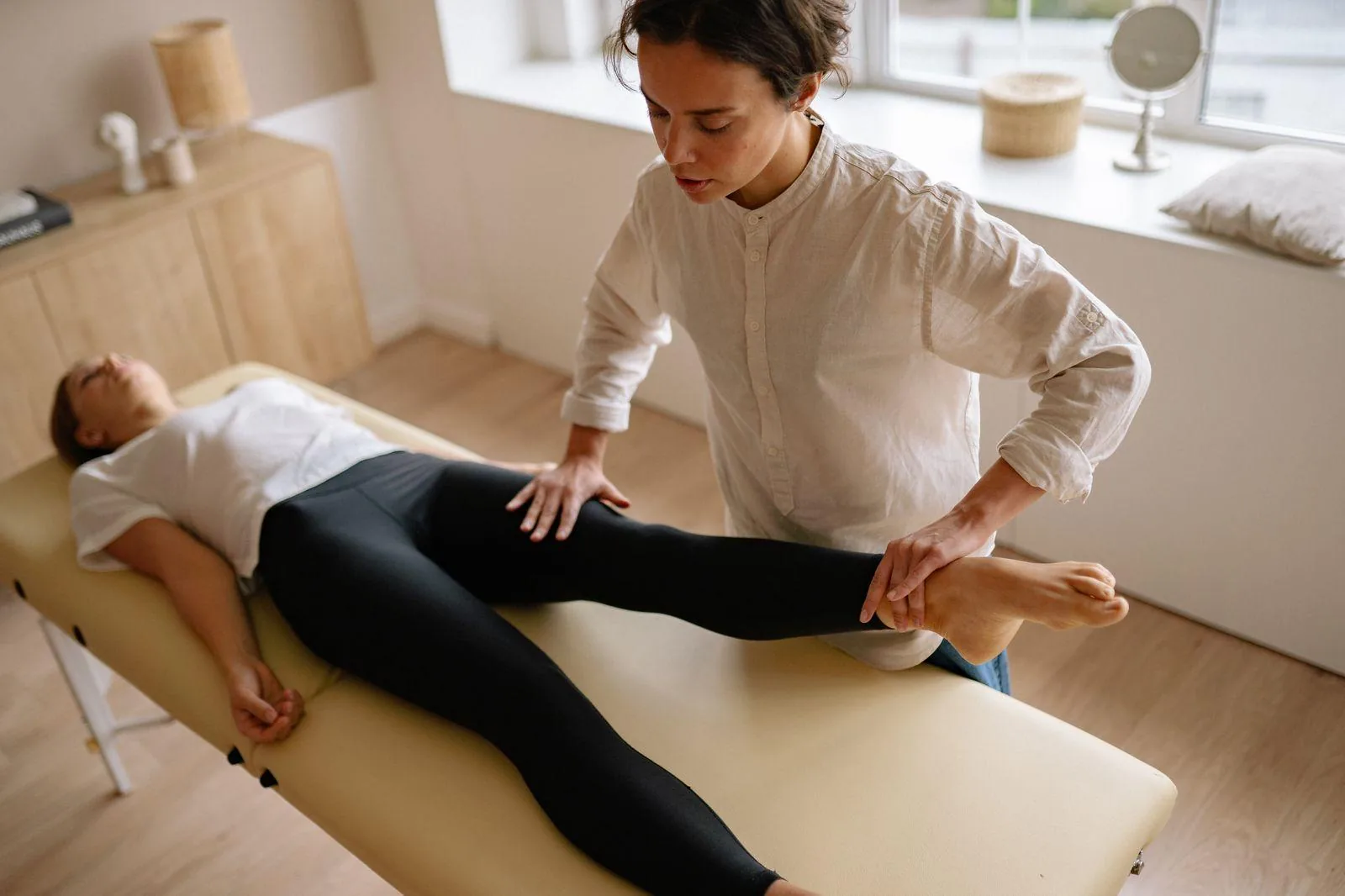
A physical therapist holds a state license, and today’s graduates hold a doctoral degree. That license lets them evaluate you, diagnose a movement problem, and treat it. Pain, injury, post-surgical recovery, tendon problems, nerve symptoms, joint stiffness: these are clinical questions, and a PT is trained to answer them. A PT also knows when a problem needs a physician instead.
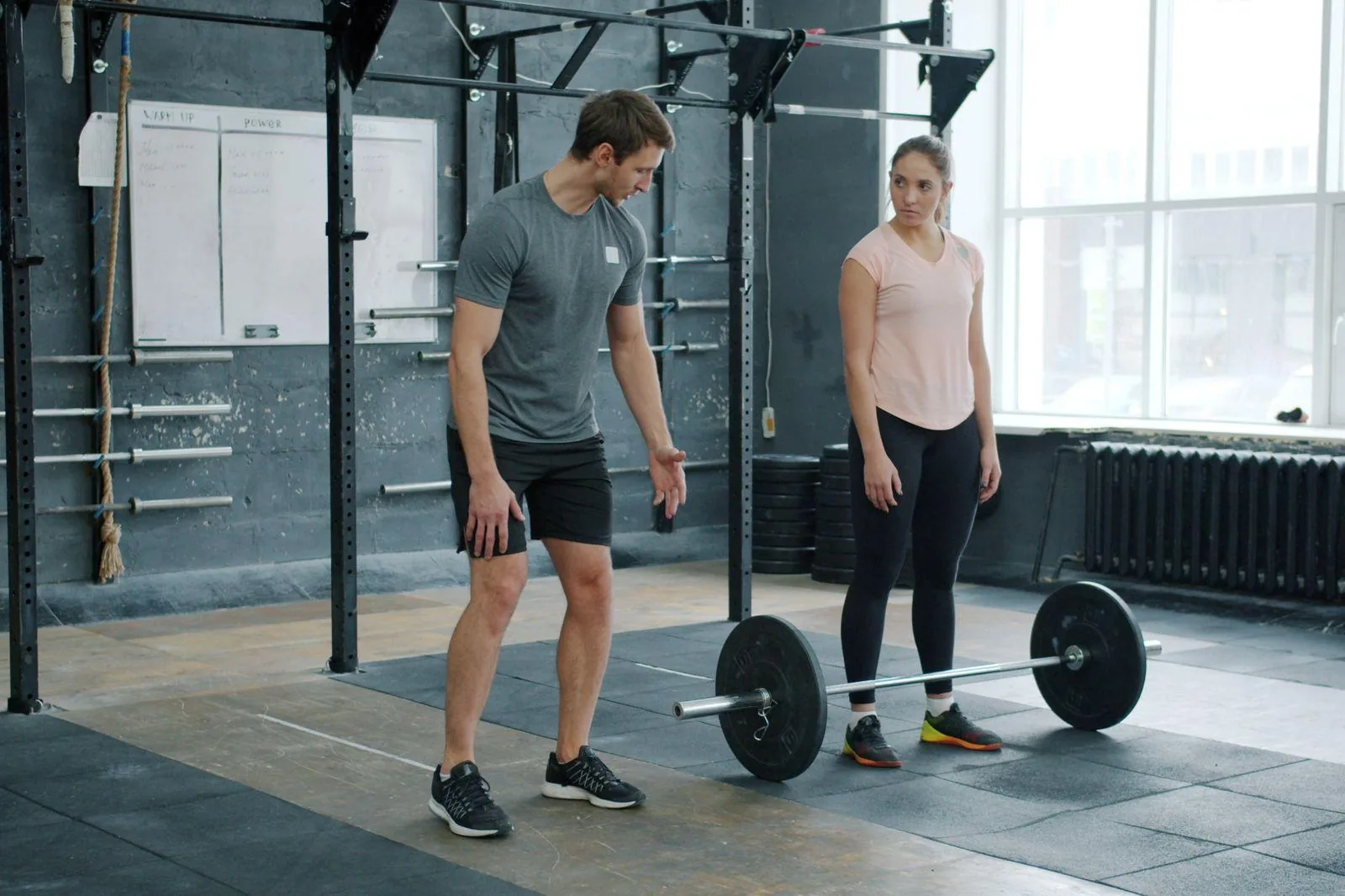
A personal trainer holds a certification, not a license. A good one is skilled at programming, coaching technique and progressing healthy people toward strength or fitness goals. What a trainer can’t do is diagnose. When you say “my shoulder hurts when I press,” a trainer can modify the exercise or send you elsewhere. Neither answers why it hurts.
A strength and conditioning coach sits on the trainer side with a sport focus: speed, power and strength for athletes. Programming and coaching, not diagnosis. At Pursuit, strength and performance training runs alongside the diagnosis.
The wrong professional doesn’t fail loudly. They fail slowly.
Where people get stuck choosing
1. Training through a problem no one can diagnose. Your trainer sees you wince and swaps the lift. The pain moves, or settles into a dull background. Months pass without anyone checking whether a tendon, joint or nerve is the issue.
2. PT that ends before you’re strong. Many clinics discharge when pain is gone and basic range of motion is back. That’s the start of recovery, not the end. If you never load heavy, sprint or cut under supervision, you return with a gap that reopens the injury. Read why 15-minute physical therapy visits don’t fix your pain.
3. The “I’m fine but something’s off” trap. No pain, but one side feels weaker or an old injury makes you hesitate. A trainer can’t assess it. A typical PT clinic sees no reason to. So nobody looks.
4. Returning after injury with no test. Feeling ready and measuring ready are different things. Return-to-sport testing exists because many re-injuries happen in that gap.
5. Picking by price instead of problem. A trainer is often cheaper per session. If the problem is clinical, those sessions buy a well-coached workaround and a problem that’s still there.
PT vs personal trainer vs Pursuit
| Physical therapist | Personal trainer | Pursuit | |
|---|---|---|---|
| Credentials | State license, usually a doctoral degree | Certification | Doctor of Physical Therapy, board-certified orthopedic specialist, strength coach |
| Can diagnose | Yes | No | Yes |
| Works with pain or injury | Yes | No, or only by avoiding it | Yes |
| Equipment | Often tables, bands, light weights | Full gym | Full gym: racks, barbells, sleds, space to sprint |
| Program progression | Usually stops at “pain-free” | Progresses healthy people | Rehab to heavy loading to sport, one continuous plan |
| When to choose | Pain, injury, post-op, nerve symptoms | Healthy, no pain, want to get fitter or stronger | Pain or injury in someone who trains, or wants to |
A trainer is right when you’re healthy. A traditional PT is right when you’re hurt. The problem is the large group who are both: hurt and training, or recovered and undertrained.
How to decide in practice
- Is there pain, numbness, swelling or a recent injury or surgery? Start with a physical therapist. A good trainer will tell you the same.
- Are you healthy and simply want to get stronger or fitter? A trainer or strength coach is right. Choose one who tracks the numbers.
- Are you somewhere in between? Training with a nagging issue, back from an injury, or sensing something isn’t right. This group should be with a PT who also coaches. One person, one plan, no handoff.
If you work with a trainer and a PT separately, make them talk. The common failure is a PT who says “no overhead work” and a trainer who never hears it.
How Pursuit combines strength and conditioning coaching with rehab
Every visit at Pursuit PT & Performance in Hopedale is a full 60 minutes with Dr. Tarandeep Jaidka (TJ). TJ is a physical therapist and a strength coach, so the hour doesn’t split into “rehab” and “training.” It’s one plan.
- Diagnose first. A full-body evaluation to find what’s driving the problem, not just where it hurts. That’s the clinical part a trainer can’t do, and why you start with one-on-one physical therapy.
- Treat what needs treating. Hands-on care, dry needling or targeted loading for the irritated tissue. It makes training possible; it isn’t the whole plan.
- Keep you training. Most patients keep lifting or running with the program adjusted around the problem.
- Progress like a coach. Barbells, racks, sleds and sprint space, with loads tracked week to week. That’s strength and performance training built into rehab, not bolted on after.
- Test, then keep going. Return-to-sport testing confirms you’re ready. Then the program becomes performance work with the coach who knows your history.
If you want to know who you’d be working with, meet TJ.
Signs you need a physical therapist, not a trainer
- Pain during or after training that has lasted more than 2–3 weeks
- A trainer has modified or removed an exercise because of pain, more than once
- Numbness, tingling or weakness in an arm or leg
- Swelling, locking, giving way or instability in a joint
- You’re within the first year after surgery or a significant injury
- You feel “fine” but one side is clearly weaker or you’re avoiding a movement
Pain with chest tightness, shortness of breath, fever or spreading symptoms should go to a physician first.
Frequently asked questions
Can a personal trainer help with an injury?
A trainer can keep you active around an injury, but can’t diagnose or treat it. Get it evaluated by a physical therapist first, then train with a plan that accounts for it.
Can a physical therapist write a strength program?
Yes, and some are excellent at it. Many clinics don’t, because visits are short and the facility isn’t built for heavy loading. Ask what the gym looks like.
Do I need to stop training while I’m in physical therapy?
Usually not. Most people keep training with the program adjusted around the problem. Stopping entirely often makes the return harder.
Do I need a referral in Massachusetts?
No. Massachusetts allows direct access, so you can book with us directly. Learn more in do you need a referral to see a physical therapist in Massachusetts.
Do you take insurance?
We’re out-of-network. We provide superbills you can submit to your insurer.
Where are you located?
We’re at 3b Condon Way, Hopedale, MA. Patients come from Milford, Franklin, Hopkinton, Holliston, Medway and across the MetroWest and Greater Boston area.
Get diagnosed and coached in one hour.
If you’ve been training around a problem, or finished PT and never got strong again, you don’t have to choose between a clinician and a coach. Book a full hour with TJ and get both, in one plan from pain to performance.
Book an appointment, no referral needed.