
What to Expect at Your First Physical Therapy Appointment
Key pointers
- Short answer: at Pursuit, your first visit is a full hour of one on one physical therapy with Dr. TJ. You talk through your history, get a full-body movement assessment, hear what’s going on, start treatment, and leave with a plan that has phases and dates.
- Wear athletic clothing and sneakers. You’ll be moving, squatting and probably lifting.
- Bring what you have: imaging reports, surgical notes, a list of what you’ve tried, and your training log.
- Expect an answer, not just a start. You leave knowing what’s likely wrong and what happens next.
- At Pursuit, every visit is 60 minutes one-on-one with Dr. TJ, including the first; no short intake, no handoff to an aide.
- No referral needed in Massachusetts; Pursuit is out-of-network and provides superbills.
You booked the appointment. Now you’re wondering what happens when you walk in. Will someone actually examine you, or will you get a form and a sheet of exercises? Should you wear gym clothes? Do you bring the MRI?
Most of that anxiety comes from high-volume clinics, where the first visit is a brief intake and the real work gets passed to an aide. It doesn’t have to be that way.
Here’s the first hour of one on one physical therapy at Pursuit, minute by minute, plus what to wear, what to bring, what it costs, and how it compares to a typical clinic.
The first hour, minute by minute
Minutes 0–15: the conversation. TJ asks what hurts, when it started, what makes it better or worse, what you’ve tried, and what you want to get back to. This isn’t a form. It’s where most of the diagnosis happens, and it includes screening questions to rule out anything that needs a physician.
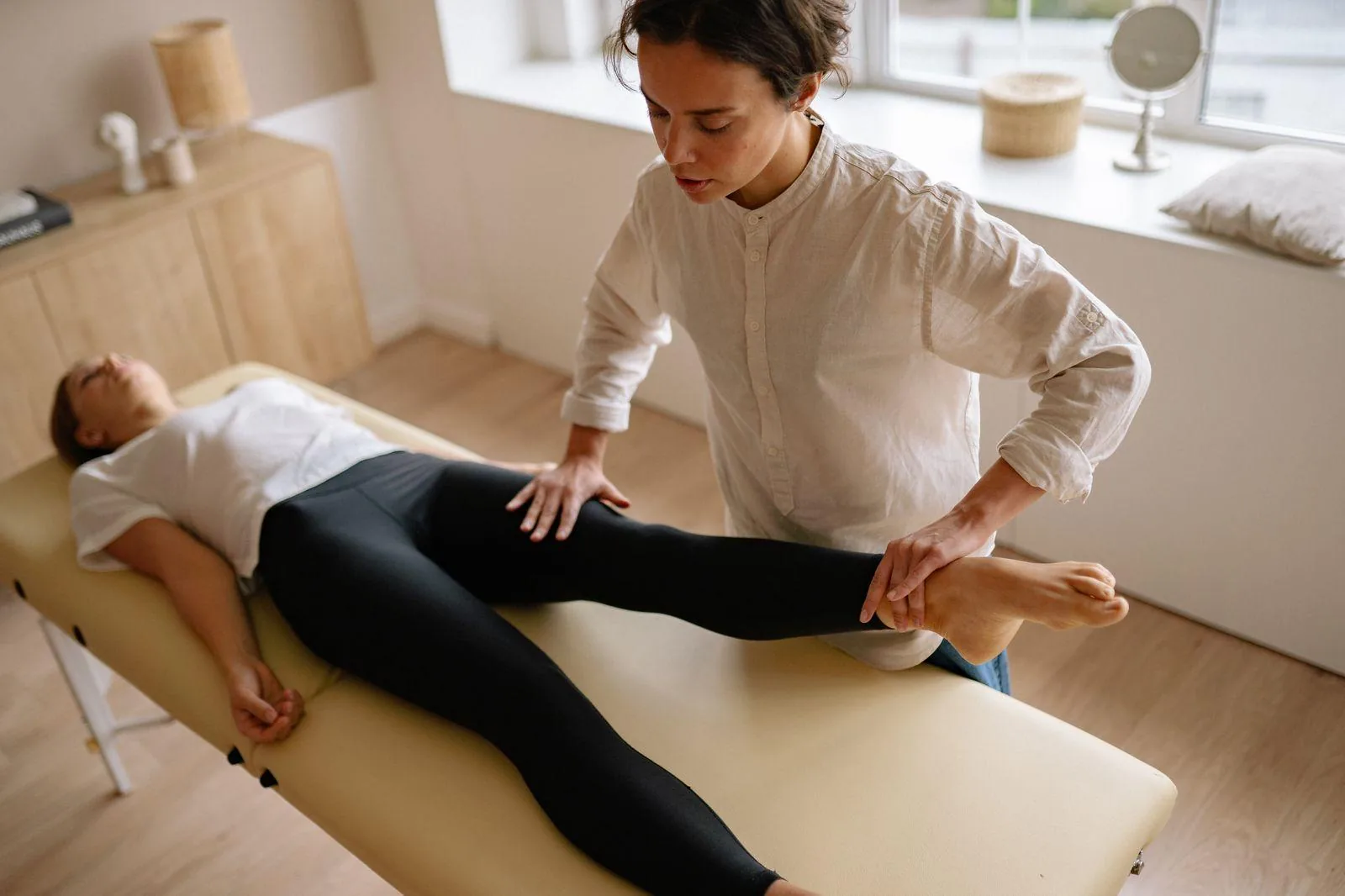
Minutes 15–35: the movement assessment. You squat, hinge, reach, balance and load, depending on the problem. Strength is tested side to side. Range of motion is measured. The painful area is examined, and so is everything connected to it. A sore knee is often driven by a hip or an ankle.
Minutes 35–40: the answer. TJ tells you what’s most likely going on, in plain language, and what’s driving it. If something needs imaging or a doctor, you hear it now.
Minutes 40–50: treatment that fits. If hands-on care will help you move better today, you get it: manual therapy or dry needling, when it suits the problem. Then you start loaded movement, coached rep by rep.
Minutes 50–60: the roadmap. You leave with a plan: what phase you’re in, what the next one requires, roughly how long it takes, and what test moves you forward. TJ checks in by text between visits.
Why a typical first visit falls short
1. The evaluation is too short to find the cause. A 15–20 minute intake can confirm where it hurts. It can’t test strength on both sides, watch you move under load and ask the follow-ups that separate diagnoses.
2. You don’t get an answer. Many people leave with exercises and no explanation. Without knowing what’s wrong, you can’t judge whether the plan makes sense, and it’s hard to stick with it.
3. The handoff starts immediately. The PT does the intake and an aide runs the exercises from visit two onward. The person who assessed you isn’t the person watching you move. Read why 15-minute physical therapy visits don’t fix your pain.
4. The plan has no endpoint. “Come twice a week and we’ll see” isn’t a roadmap. You should know what has to be true before you’re done.
First visit at a typical clinic vs at Pursuit
| Step | Typical high-volume clinic | Pursuit |
|---|---|---|
| Length | 30–45 minutes, with a short time one-on-one | Full 60 minutes, all with TJ |
| Who evaluates you | A PT, briefly | A Doctor of Physical Therapy and board-certified orthopedic specialist |
| Assessment | Focused on the painful area | Full-body: strength, mobility, control, movement under load |
| What you leave with | A printed exercise sheet | A diagnosis in plain language and a phased plan with timelines |
| Treatment on day one | Sometimes, often brief | Hands-on care if it fits, plus coached loading |
| Between visits | Nothing | Text access to TJ and a program updated weekly |
Both are called an “evaluation.” Only one is designed to produce an answer, and that’s what one-on-one physical therapy is built around.
How to prepare for your first appointment
- Wear athletic clothing and sneakers. Shorts or leggings for a knee, hip or back problem. A tank top for a shoulder.
- Bring imaging reports and surgical notes if you have them. The written report matters more than the disc. If you have none, that’s fine; most problems don’t need imaging.
- Write down what you’ve tried. Prior PT, chiropractic, injections, rest, braces, medications. What didn’t work is as useful as what did.
- Bring your training log if you keep one. How much you were running, lifting or skating before the pain started is often the most useful information you have.
- Know your goal. “Run Boston without my knee stopping me” shapes the plan. Vague goals produce vague plans.
To compare clinics before you commit, how to choose a physical therapist gives you seven questions to ask on the phone.
How Pursuit runs the first visit
Every visit at Pursuit PT & Performance in Hopedale is a full 60 minutes with Dr. Tarandeep Jaidka (TJ), including the first. The hour covers:
- A real conversation. Your history, your goals and the screening questions that confirm PT is the right place for you. That’s the foundation of one-on-one physical therapy.
- A full-body assessment in a gym with squat racks, barbells, sleds and room to sprint, because that’s where the problem shows up.
- A clear explanation of what’s likely wrong and what’s driving it, before treatment starts.
- Treatment and your first loaded exercises, coached in person. Rehab and strength and performance training share a room.
- A roadmap with dates. Phases, timelines and the tests that move you between them, with text support between visits.
You don’t need a referral to book. See a PT without a doctor’s visit explains how direct access works.
What it costs and how many visits you’ll need
Pursuit is out-of-network. You pay per visit and receive a superbill, an itemized receipt with the codes insurers use. Submit it to your insurer; depending on your out-of-network benefits, they may reimburse part of the cost. Some plans still want a referral on file, so call them before the first visit.
Most patients start at 1–2 visits a week and taper as they progress. Many reach full recovery in about 12 weeks; simple problems resolve faster, post-surgical rehab takes longer. Because every visit is a full hour with a plan updated weekly, the total visit count is often lower than at a high-volume clinic.
You’ll know the expected number after the first evaluation, not the tenth.
When to see a doctor before a physical therapist
A few things belong with a physician or emergency department first:
- A fall or collision with severe pain, rapid swelling or a limb that won’t bear weight
- Numbness or weakness that’s spreading, or trouble controlling bladder or bowel
- Pain with fever, unexplained weight loss or feeling generally unwell
- Chest pain or shortness of breath
- A hot, red, swollen joint with no injury to explain it
If you’re unsure, book anyway. The first conversation screens for these.
Frequently asked questions
Will my first physical therapy visit hurt?
Some tests reproduce your pain on purpose; that’s how the source is confirmed. Nothing should be severe, and you can stop anything at any time.
How long is the first appointment?
At Pursuit, 60 minutes, all one-on-one with TJ. At many clinics it’s shorter and partly spent with an aide.
Can I bring someone with me?
Yes. A parent, partner or coach is welcome.
Do I need a referral in Massachusetts?
No. Massachusetts allows direct access, so you can book with us directly. Learn more in do you need a referral to see a physical therapist in Massachusetts.
Do you take insurance?
We’re out-of-network. We provide superbills you can submit to your insurer.
Where are you located?
We’re at 3b Condon Way, Hopedale, MA. Patients come from Milford, Franklin, Hopkinton, Holliston, Medway and across the MetroWest and Greater Boston area.
Come in with questions. Leave with answers.
If your last first visit ended with a worksheet and no explanation, that was the clinic, not you. Book a full hour with TJ and leave knowing what’s wrong and exactly what to do about it.
Book an appointment, no referral needed.